
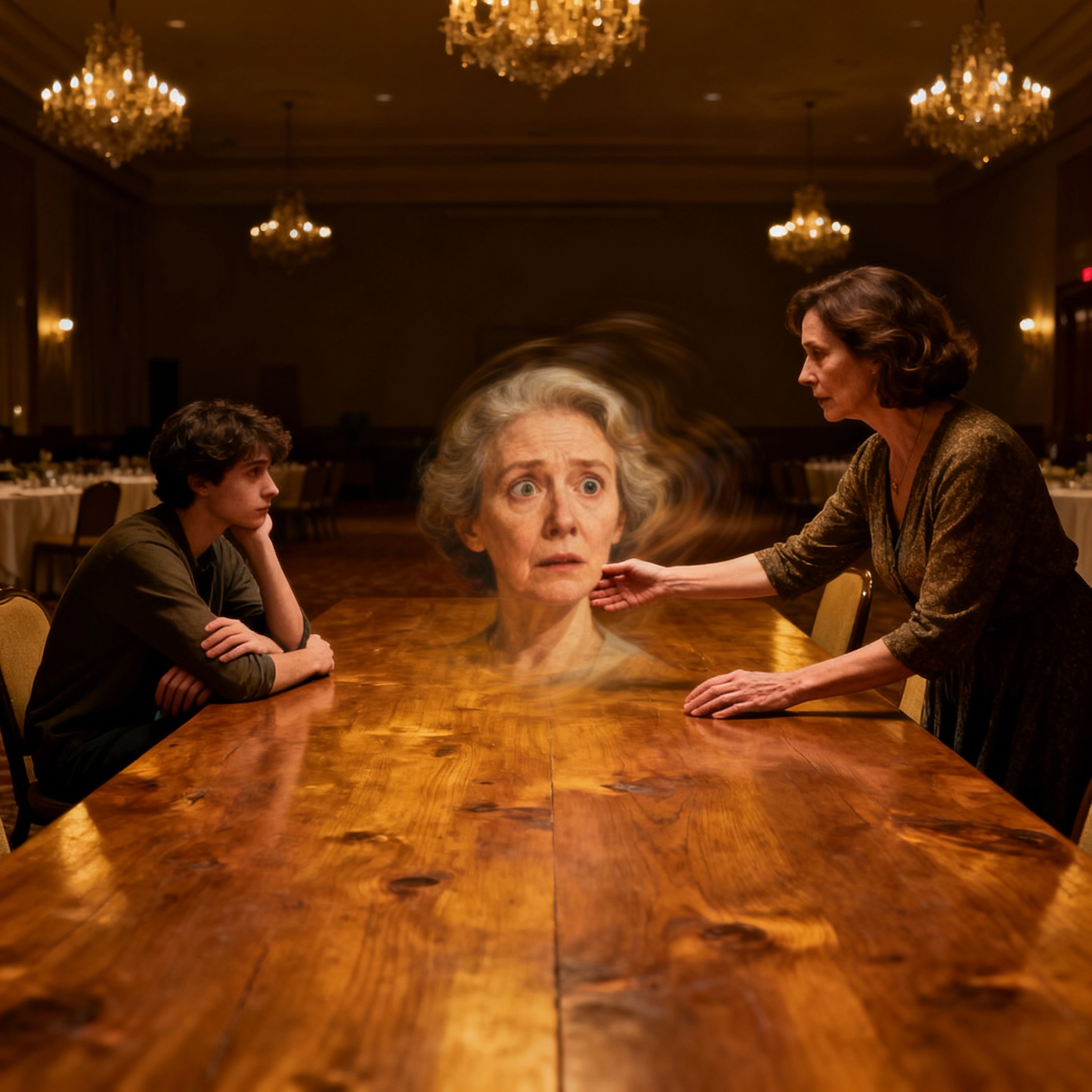
I am in a large banquet room. There aren't too many people there. The light is a warm white yellow orange. The table is very old and long. Its made for large gatherings. The table is antique. it is wooden, not dark wood but medium. I am sitting at the far end of the table sideways, bending over my knees looking down with my elbows resting on my knees. My niece Monica who is 46 years old comes leading my Mom into the room. My Mother died weeks ago. Monica is leading her and she says "look, I've got her!" Monica brings my Mom who is in her younger years around the table to me. I'm just sitting there and when I look up, my Mom Virginia her face morphs into someone else like my Aunt or something. I say 'oh, that's not her that's?'
Dreams often serve as a canvas for our subconscious, weaving together emotions, memories, and the experiences we are grappling with in waking life. In your dream, there are several key elements worth unpacking to understand the emotions and meanings behind your experience.
Setting: The Banquet Room
The large banquet room symbolizes a space of gathering and connection, typically associated with celebration and community. However, the fact that it isn't crowded could indicate feelings of loneliness or isolation, suggesting that you are processing your grief in a somewhat solitary manner. The warm, white-yellow-orange light evokes a sense of nostalgia and comfort, perhaps pointing to cherished memories you hold of family gatherings with your mother, and a yearning for those connections.
The Long Antique Table
The table, being antique and made of medium wood, represents history and familial bonds. It is a symbol of deep-rooted connections, implying that your family legacy and the relationships you held with your mother are significant parts of your identity. The antiquity of the table may suggest that you are reflecting on the past and how it shapes your present.
Your Position at the Table
Sitting at the far end of the table, bending over your knees and looking down can symbolize feelings of contemplation, introspection, and perhaps sadness. This posture indicates a moment of vulnerability as you process your emotions about your mother’s passing. There may be a sense of feeling distant from the warmth and connection reflected in the banquet setting.
Monica Leading Your Mother
The presence of your niece, Monica, leading your mother into the room highlights a bridge between generations. This act of bringing your mother into the space symbolizes connection and communication. It shows your desire to still feel that familial bond, even in the absence of your mother. Monica's words, "look, I've got her!" can reflect your hope and yearning to hold onto your mother's memory.
Your Mother's Transformation
When your mother morphs into someone else, like your aunt, this can point to the complexities of memory and grief. It may represent the way you are processing your mother’s identity; she may be changing in your mind as you come to terms with her absence. The fact that you question her identity with surprise suggests your difficulty in accepting her loss, and the feeling that the essence of your mother is changing or evolving in your memory, perhaps becoming intertwined with other family figures.
The Question: “That’s not her, that’s?”
This moment of realization and questioning indicates a struggle with acceptance. You are confronting the reality of loss and how it transforms your perception of loved ones and family relationships. This reflection can signify an ongoing process of remembrance and honoring your mother, yet also coping with the painful reality that she is no longer physically present.
Overall, this dream appears to be a poignant exploration of your grief, the process of remembering your mother, and the connections that bind your family together despite loss. It suggests a desire to reconnect with your mother, to understand the changes in your family dynamics, and to process the emotions that accompany her passing. It's a powerful reminder to honor the impact of those who have come before us, while also allowing yourself to navigate the complexities of grief.